📁 Australia news
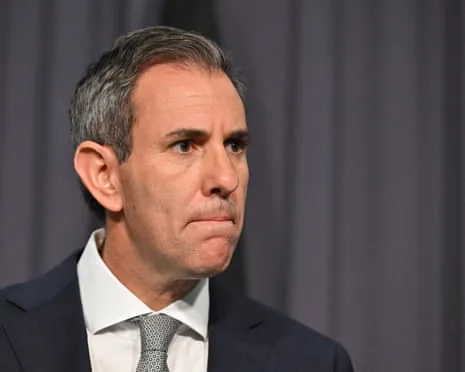
Jim Chalmers is blaming Australia’s accelerating inflation on Trump
E
Editorial Team
2026-10-28
👁 25 views
Treasurer Jim Chalmers is blaming the war in the Middle East for inflation jumping to 4.3%. Photograph: Lukas Coch/Reuters
Australia’s rising cost of living is putting more pressure on families, with inflation increasing and another interest rate rise expected next week. The ongoing war in the Middle East has pushed up fuel prices, but many voters also blame the government for the growing financial pressure.
Treasurer Jim Chalmers has blamed the latest rise in inflation on the worsening conflict in the Middle East. He has a point, as higher fuel prices are making life more expensive. However, many Australians are not convinced that events overseas explain the whole problem.
According to the Australian Bureau of Statistics, inflation rose from 4% to 4.3%. A 9.4% jump in fuel prices during September was a major reason for the increase. Petrol and diesel cost an average of 24% more than they did a year earlier.
The war involving the United States and Iran has added to the pressure on global oil prices. These higher costs are affecting Australian households, even though the conflict is outside the government’s control.
Another problem is the rapid growth in spending on data centres. Technology companies around the world are building more facilities to support artificial intelligence. This requires large amounts of money, workers and building materials.
Australia is already struggling to find enough workers and materials to build homes and roads. The growing demand from data centre projects could add to these pressures and make it harder to control inflation.
Reserve Bank of Australia Governor Michele Bullock has also warned that overseas events are making it harder to bring inflation down to the bank’s target of 2.5%, preferably by the end of next year.
However, voters are also blaming government decisions for the rising cost of living.
A recent Essential poll found that nearly one-third of voters believe government spending is the biggest reason living costs are rising. Only 24% blamed overseas events, such as the global oil shock, while 19% pointed to supermarkets charging too much.
Economists, including budget expert Chris Richardson, have argued that government spending is too high and is making it harder to reduce inflation. Government spending as a share of the economy is close to record levels.
This makes it difficult for Chalmers to argue that the government has no responsibility for rising prices. Although the war has pushed fuel costs higher, pressure on Australia’s economy was already building before the conflict began in late February.
Another warning sign is that underlying inflation has also increased. This measure removes unusually large price changes to give a clearer picture of general price rises. It climbed from 3.6% to 3.7% in the year to the September quarter.
Another interest rate rise could add to household pain
The Reserve Bank is expected to raise interest rates again next Tuesday. If it does, it will be the fifth increase this year.
At Senate estimates, Reserve Bank officials said they were more concerned about inflation staying high for a long time than about rising unemployment. Unemployment has recently reached its highest level in five years.
A further increase would push the official cash rate to 4.85%, its highest level since the global financial crisis in 2008. Higher interest rates generally mean larger mortgage repayments for people with home loans, leaving them with less money for other expenses.
Sarah Hunter, the Reserve Bank’s chief economist, offered some reassurance. She said there were no signs that Australia was in, or heading towards, a recession in the near future.
Even so, many families are facing a difficult period. They are approaching Christmas with expensive fuel, rising unemployment and interest rates at levels not seen for many years.
For households already struggling to pay bills and mortgage repayments, the coming summer could bring even more financial stress.
Public confidence is also falling. The latest Essential poll found that 61% of Australians believe the country is heading in the wrong direction. Just 25% believe it is moving in the right direction.
Pressure builds on the government
With the government approaching the third year of its parliamentary term, Chalmers faces growing pressure to show that he can ease the cost-of-living crisis.
The government will have another chance to explain its plans in December, when it releases its mid-year budget update. However, finding ways to help families without adding further pressure to inflation will be difficult.
The latest figures show that the problem has several causes. Higher fuel prices linked to the Middle East conflict are part of it, but government spending and pressure on Australia’s economy also matter.
Whatever the reason, families are likely to feel more pain if interest rates rise again.
There is at least one point many Australians may agree on: an end to the war in the Middle East cannot come soon enough.